2026.11.17
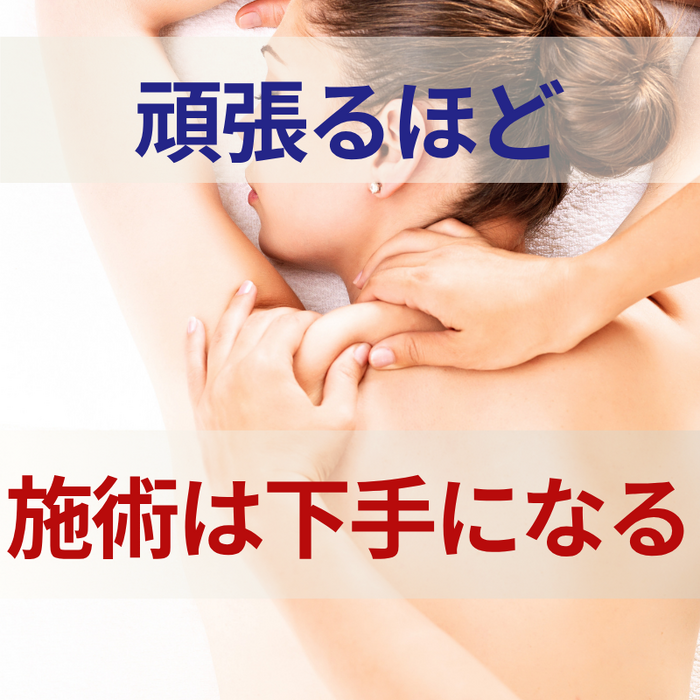
The harder you try, the worse your technique becomes. The true meaning of "the art of creating comfort."
query_builder
2026/11/07
swedishswedish
When you think about honing your massage skills, what comes to mind?
To be able to press deeper.
Learn more complex techniques.
To be able to apply stronger pressure.
Of course, those may also be part of the technology.
However, there is something I still cherish from my 23 years of teaching Swedish massage.
This means that the more effort a practitioner puts in, the better the treatment doesn't necessarily become.
In fact, the harder you try, the lower the quality of your treatment may become.
This might come as a bit of a surprise.
Working hard is actually easy.
A therapist wants to make their client feel even a little bit more comfortable.
That's why I end up trying too hard.
Let's apply more pressure.
Let's massage it more gently.
Let's loosen it up more.
Those feelings are by no means a bad thing.
However, trying hard can be expressed relatively easily by simply applying physical force.
On the other hand, it's not easy to let go of unnecessary tension.
Instead of tensing up, let go of the tension.
Instead of trying to do it with your own strength, use your body weight to your advantage.
Instead of trying to change the other person, focus on sensing their physical reactions.
This is actually a very advanced technique.
Doing nothing and not doing anything unnecessary are two different things.
This requires a good understanding of how to use your body, your center of gravity, your posture, how to make good contact with your hands, the direction of pressure, rhythm, and the ability to sense your opponent's body.
Why does the recipient's body relax when the practitioner becomes more relaxed?
In Swedish massage, the practitioner works to eliminate as much unnecessary tension as possible from themselves.
Instead of pushing with just your arms, transfer the weight of your entire body to your hands.
Instead of trying to do everything with your hands alone, coordinate your body movements with your hand movements.
Then, we explore ways of touching the other person that don't create resistance in their body.
When the practitioner is tense, it's easy for unnecessary tension to be created in the pressure and movement of their hands.
The recipient's body may also unconsciously brace itself in response to that pressure.
Conversely, if the practitioner's body is stable and there is no unnecessary tension in their hands, the recipient will feel more at ease and be able to entrust their body to them.
The human body naturally releases tension only when it is in a safe and secure environment.
In other words, making things easier for the practitioner isn't just about avoiding fatigue themselves.
This also helps create an environment where the recipient can surrender their body without unnecessary resistance.
Overexerting yourself during a treatment can exhaust the therapist.
What would happen if the practitioner tensed their arms and shoulders every time they performed a treatment?
Naturally, your body will get tired.
I dedicate all my energy to one client, but as I move on to the second and third clients, my concentration and senses gradually decline.
And I can't do it enough.
My body can't handle it.
It becomes difficult to continue working.
This is a matter of technique, but it's also a matter of how you use your body.
In principle, honing one's skills should not involve pushing one's body to its limits.
Performing necessary tasks precisely with minimal energy.
To be able to provide high-quality treatments to any number of clients without putting undue strain on one's own body.
I believe that's also an important skill for a professional.
Technology isn't just about addition.
When you first start learning, you naturally try to acquire a certain skill.
They try to expand their capabilities by learning new techniques, experimenting with different ways of applying pressure, and so on.
However, beyond a certain point, technology is no longer just about addition.
Eliminate unnecessary force.
Eliminate unnecessary movements.
Avoid touching it more than necessary.
Let go of the desire to change the other person.
In what remains after this process, you can sometimes see that person's true skills.
This isn't just true for Swedish massage.
Regardless of the skill, I believe that as you become more skilled, you eliminate waste and refine the necessary force and movements.
The "techniques for creating ease" that I want to share.
I have been teaching Swedish massage for 23 years.
Nevertheless, there are new discoveries every year, every time.
Even when teaching the same techniques, each student uses their body differently, has different habits of tensing up, and perceives things differently.
That's why simply teaching the steps won't convey true skill.
Where is the focus of the effort?
Why does the other person's body tense up?
How can I use my body more easily?
How can I get the other person to feel safe and comfortable enough to entrust their body to me?
We will explore each of those together.
What I want to convey at EAO is that I'm not a therapist who tries hard to do something.
I am a therapist who can deeply connect with the client's body while remaining natural and comfortable myself.
From the skill of striving hard to the skill of delegating.
From the technique of applying force to the technique of letting go of tension.
Furthermore, when the practitioner is comfortable, it contributes to the client's comfort as well.
I want to continue to cherish and pass on this "technique for creating ease."
KAORI
----------------------------------------------------------------------
Executive Academy Osaka
Address: 601 Excel Utsubo, 1-8-12 Kyomachibori, Nishi Ward, Osaka City, Osaka Prefecture
----------------------------------------------------------------------
therapist
therapist
oil
oil
aroma
aroma
body
body
lymph
lymph
NEW
-
-
2026.11.13The reason I love Swe...Why I love Swedish massage. Of course, there's ...
-
2026.11.10"Curing" is not the o...As a therapist, I naturally feel a strong desir...
-
2026.11.07To become a therapist...In working as a therapist, Acquiring technical ...
-
2026.11.07The harder you try, t...When you think about honing your massage skills...
-
2026.11.03The Autonomic Nervous...Clients who visit the salon complain of chronic...
-
2026.10.26Swedish massage warms...The weather will get colder from now on. There ...
-
2026.10.22Where do the differen...When I observe my students performing treatment...
VIEW MORE
CATEGORY
ARCHIVE
- 2026/116
- 2026/1012
- 2026/0913
- 2026/0810
- 2026/076
- 2026/068
- 2026/0511
- 2026/048
- 2026/037
- 2026/028
- 2026/017
- 2025/123
- 2025/111
- 2025/105
- 2025/082
- 2025/072
- 2025/062
- 2025/031
- 2024/121
- 2024/1117
- 2024/1018
- 2024/0918
- 2024/0819
- 2024/0714
- 2024/068
- 2024/0511
- 2024/0410
- 2024/0310
- 2024/0220
- 2024/017
- 2023/121
- 2023/111
- 2023/106
- 2023/098
- 2023/089


